
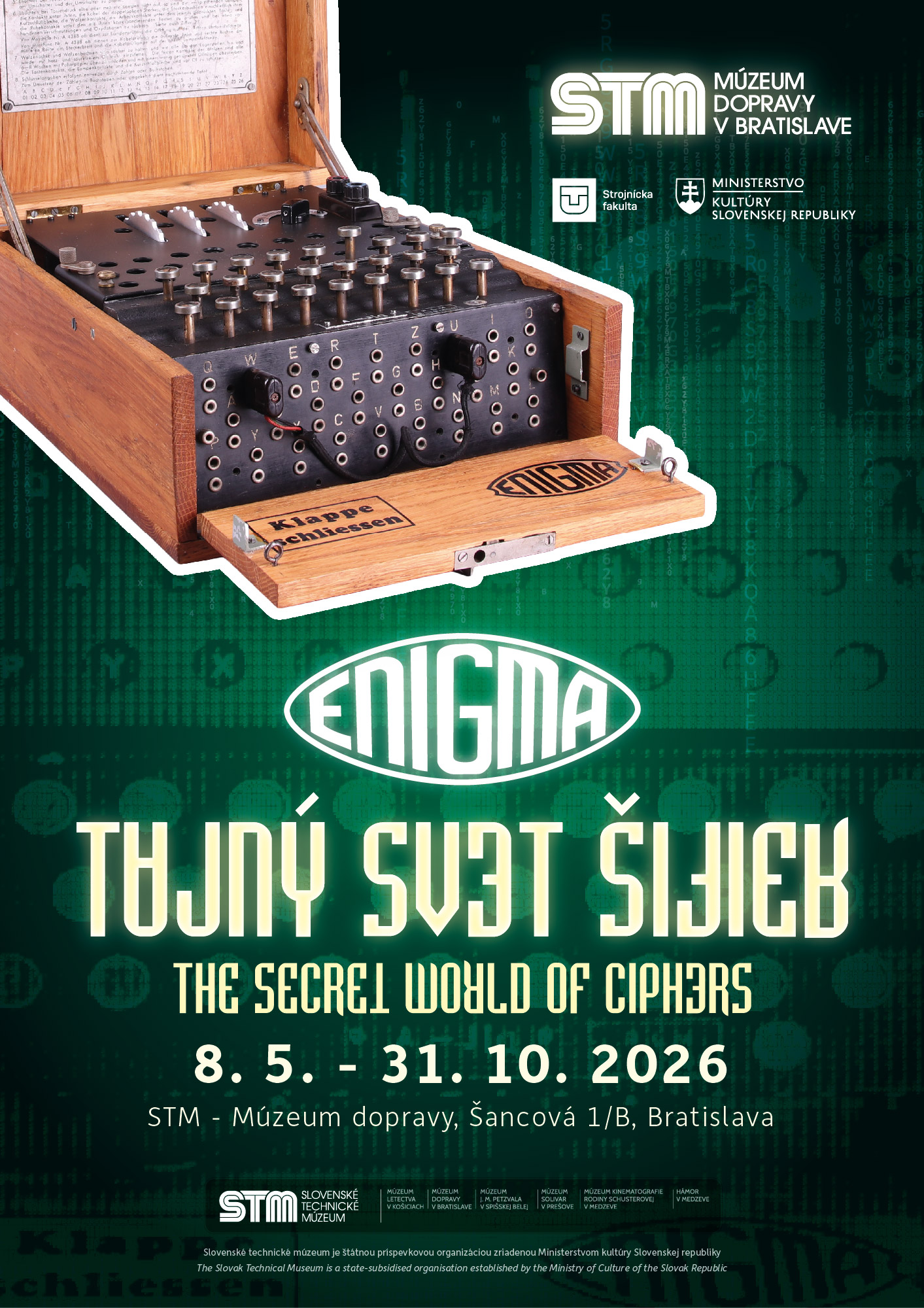
STM – Múzeum dopravy v Bratislave presents the extraordinary exhibition ENIGMA. The Secret World of Codes, offering visitors a deep dive into the world of cryptology, encryption, and secret communication systems that profoundly shaped modern history.
At the heart of the exhibition stands the legendary German cipher machine ENIGMA M3 from 1942, the only known surviving example of its kind in Slovakia. This technically and historically significant artifact was a key tool used by the German military during World War II and remains one of the most iconic symbols in the history of cryptography.
The exhibition explores not only the machine itself but also the broader development of cryptography, cryptanalysis, and steganography. Visitors gain insight into how secret communication evolved throughout the 20th century and how the breaking of Enigma codes became one of the decisive turning points of World War II.
A compelling narrative element is the remarkable journey of the exhibited machine—its accidental preservation, post-war concealment, and rediscovery in a private collection, from which it was acquired by the Slovak Technical Museum in 2020.
By combining historical context, scientific knowledge, and interactive elements, the exhibition makes the complex world of codes and ciphers accessible and engaging for a wide audience.
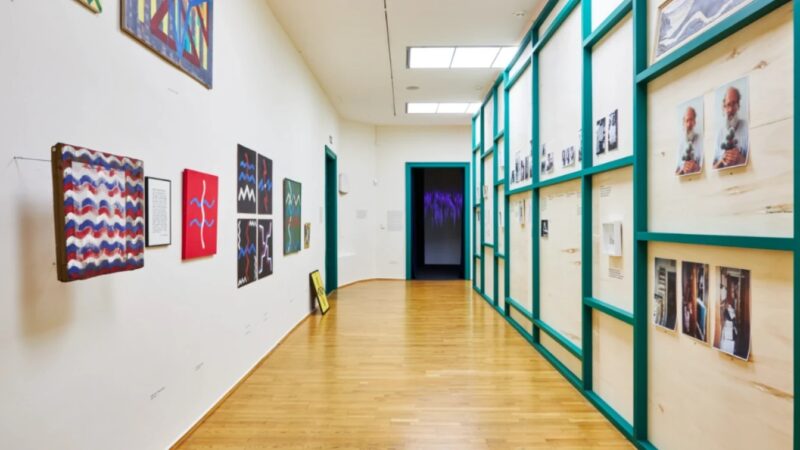
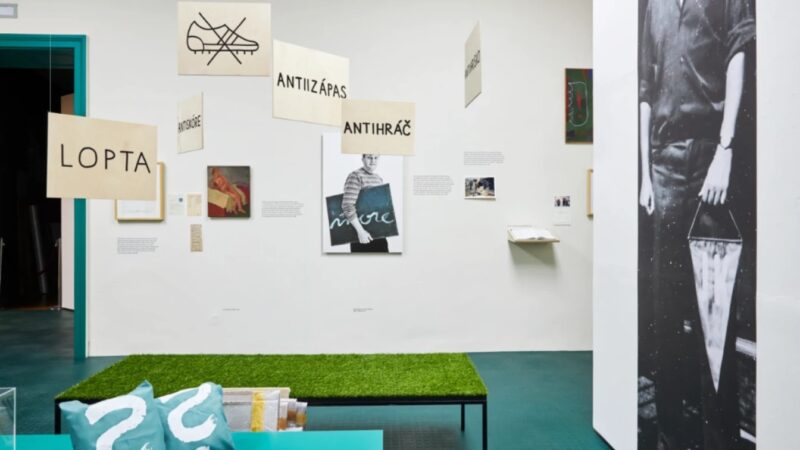
Thanks to a comprehensive monographic exposition of Július Koller you will get to know the personality and work of one of our most famous conceptual artists, whose name has been resounding abroad as well.
More information and tickets here.
The graphic cabinets — conveniently named “secular” and “biblical” according to the prevailing theme of the graphic sheets — have been preserved as interior wall decoration in two rooms of the representative floor of the Mirbach Palace, likely commissioned by one of the original owners of the building. They contain 290 engravings, etchings, and mezzotints from the second half of the 17th and 18th centuries, secondarily colored by unknown authors.
The secular cabinet houses 84 graphic sheets of French, Italian, and English origin, displayed in individual panels in a four-tiered decorative installation. The collection comprises pastoral, allegorical, historical, mythological, genre, and two biblical themes.
The most extensive group of works is based on paintings by the Flemish painter Peter Paul Rubens. Other interesting graphics include engraved interpretations of works by François Boucher, Charles Joseph Dominiqua Eisen, Jean-Baptiste Le Prince, Pierre Mignard, Louis de Boullogne, Pietro da Cortona, Angelika Kauffman, and others.
In the biblical cabinet, there are 206 graphic sheets of various sizes, exclusively featuring sacred motifs. Impressive works of Italian origin are placed in larger formats in the middle of three walls, while smaller graphics of Dutch, German, French, and Italian origin can be found on the edges and on the east wall. The most extensive series of graphics comes from the Dutch artists Caspar and Jan Luyken, as well as Francesco Antonio Meloni.
Graphic sheets based on models by Jacopo Amigoni, Giuseppe Zocchi, Giovanni Battista Pittoni, Pietro Longhi, Francesco Guardi, and others are also worth mentioning. Several works, for example, based on models by Franz Sigrist d. Ä., Gottfried Bernhard Göz, and the etchers Jakob Gottlieb Thelott, and probably Georg Philipp II Rugendas, were published by the German publishing house of Johann Georg Hertel.
More information can be found here
The Crown Tower in Bratislava Castle holds significant historical value. Built in the 13th century, it is considered the oldest remaining structure within the castle. In the 15th century, it was incorporated into the Castle Palace as the southwest corner. It was named after the Hungarian crown jewels, which were kept there, except for intermittent periods between 1552 and 1783. In the present day, the Crown Tower serves various purposes. It houses a small exhibition showcasing the crowns of Hungarian kings, coronation medals, and artwork depicting coronations that occurred in Bratislava.
Furthermore, following its reconstruction, the tower’s upper floor now functions as an observation deck for visitors. From there, one can enjoy panoramic views of Bratislava and even glimpse three countries: Slovakia, Austria, and Hungary.
More information can be found here