
The collection of the Nedbalka Gallery also includes works by many great contemporary artists, from the latter half of the twentieth century up to the present. This period introduced a plurality of artistic trends and put emphasis on the individual creative act. Different artistic approaches towards painting and sculpture became legitimate and unique, irrespective of the fact that the times (socialist realism) were against them. Yet, the presented artists had the courage to follow their own path and remain loyal to their beliefs. Some stick to more traditional techniques, others constantly experiment and try new methods.
Artists on display: Július Jakoby, Ernest Zmeták, Endre Nemes, Viera Kraicová, Stanislav Filko, Rudolf Fila, Milan Dobeš, Ester Šimerová-Martinčeková, Ladislav Guderna, Viera Žilinčanová, Michal Jakabčic, Ján Ilavský, Alexander Mlynárčik, Peter Matejka, Jozef Jankovič, Zora Palová, Juraj Rusňák, Rudolf Uher, Július Koller, Marián Čunderlík, Agnesa Sigetová.
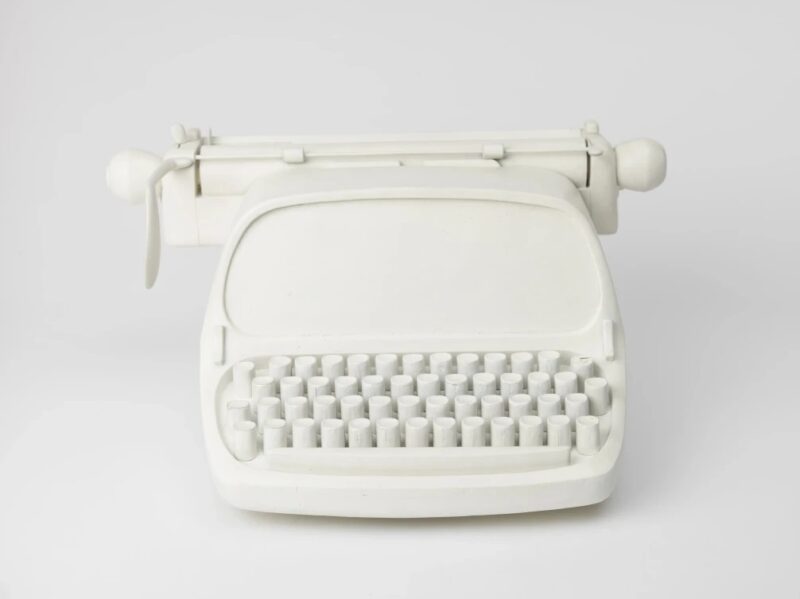
Design, applied art and craftsmanship are more of a surprise than an everyday occurrence in the galleries. They have had their place in the Slovak National Gallery for more than 60 years. For a long time, they were part of the dream of a Slovak art and industrial museum, and today they are above all a subtle but eloquent message about the vital relationships between design, art and craft.
The curators selected masterpieces and objects from the back shelves of depositories, reached for progressive works, also gave the floor to uncomfortable, controversial artifacts in order to find a visual and meaningful spark between them. You will recognize the works as bearers of information about the events and personalities of the collection, design and artistic quality, symbolism and place of origin in various contexts – as part of visual culture, economic practice, significant historical events and ordinary social and societal situations, such as politics. You can also study them in more depth thanks to the rich digital content.
The graphic cabinets — conveniently named “secular” and “biblical” according to the prevailing theme of the graphic sheets — have been preserved as interior wall decoration in two rooms of the representative floor of the Mirbach Palace, likely commissioned by one of the original owners of the building. They contain 290 engravings, etchings, and mezzotints from the second half of the 17th and 18th centuries, secondarily colored by unknown authors.
The secular cabinet houses 84 graphic sheets of French, Italian, and English origin, displayed in individual panels in a four-tiered decorative installation. The collection comprises pastoral, allegorical, historical, mythological, genre, and two biblical themes.
The most extensive group of works is based on paintings by the Flemish painter Peter Paul Rubens. Other interesting graphics include engraved interpretations of works by François Boucher, Charles Joseph Dominiqua Eisen, Jean-Baptiste Le Prince, Pierre Mignard, Louis de Boullogne, Pietro da Cortona, Angelika Kauffman, and others.
In the biblical cabinet, there are 206 graphic sheets of various sizes, exclusively featuring sacred motifs. Impressive works of Italian origin are placed in larger formats in the middle of three walls, while smaller graphics of Dutch, German, French, and Italian origin can be found on the edges and on the east wall. The most extensive series of graphics comes from the Dutch artists Caspar and Jan Luyken, as well as Francesco Antonio Meloni.
Graphic sheets based on models by Jacopo Amigoni, Giuseppe Zocchi, Giovanni Battista Pittoni, Pietro Longhi, Francesco Guardi, and others are also worth mentioning. Several works, for example, based on models by Franz Sigrist d. Ä., Gottfried Bernhard Göz, and the etchers Jakob Gottlieb Thelott, and probably Georg Philipp II Rugendas, were published by the German publishing house of Johann Georg Hertel.
More information can be found here