
STM – Múzeum dopravy v Bratislave presents the extraordinary exhibition ENIGMA. The Secret World of Codes, offering visitors a deep dive into the world of cryptology, encryption, and secret communication systems that profoundly shaped modern history.
At the heart of the exhibition stands the legendary German cipher machine ENIGMA M3 from 1942, the only known surviving example of its kind in Slovakia. This technically and historically significant artifact was a key tool used by the German military during World War II and remains one of the most iconic symbols in the history of cryptography.
The exhibition explores not only the machine itself but also the broader development of cryptography, cryptanalysis, and steganography. Visitors gain insight into how secret communication evolved throughout the 20th century and how the breaking of Enigma codes became one of the decisive turning points of World War II.
A compelling narrative element is the remarkable journey of the exhibited machine—its accidental preservation, post-war concealment, and rediscovery in a private collection, from which it was acquired by the Slovak Technical Museum in 2020.
By combining historical context, scientific knowledge, and interactive elements, the exhibition makes the complex world of codes and ciphers accessible and engaging for a wide audience.
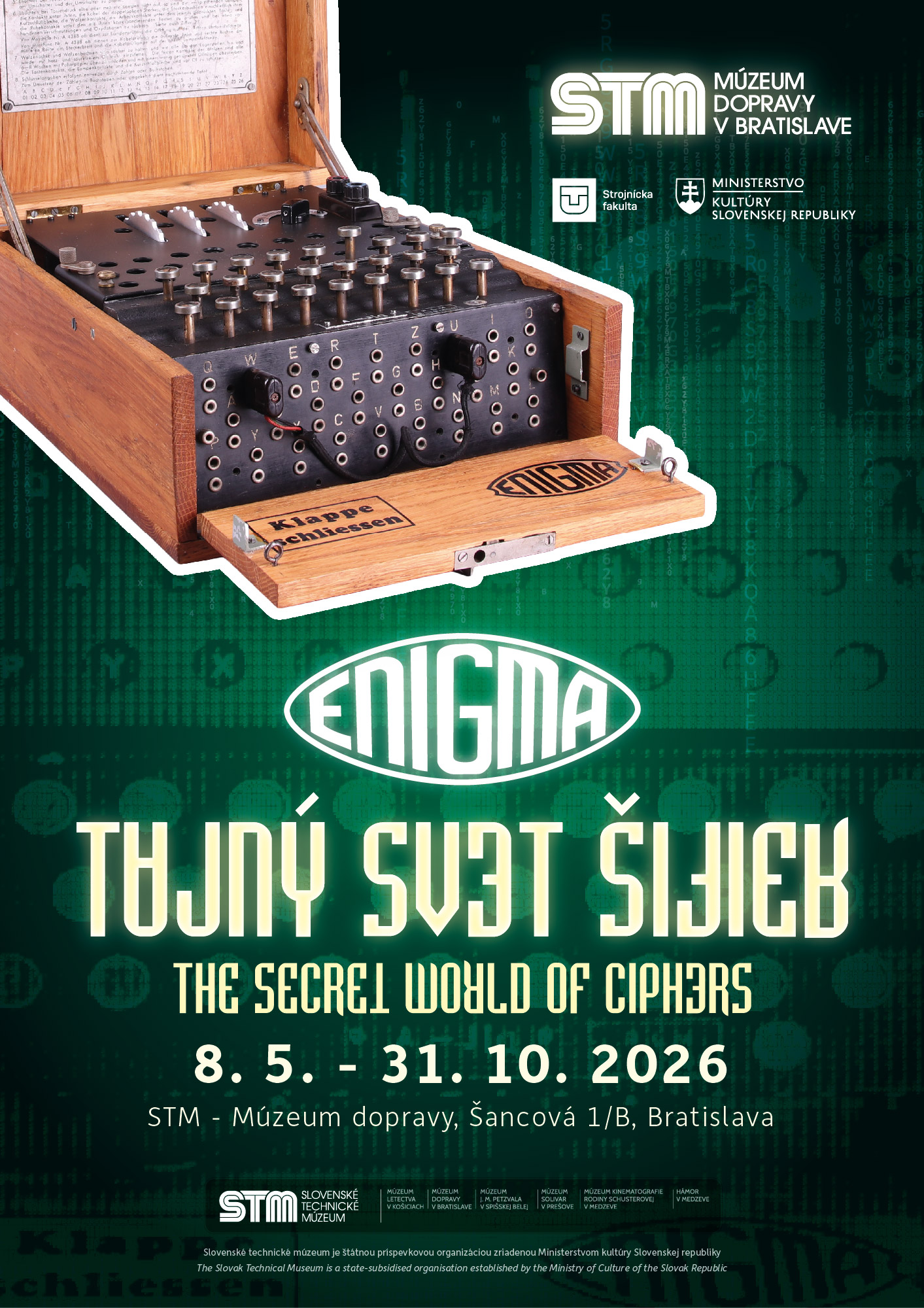
This late modern art, the representatives of which deliberately promoted the tradition of interwar modern art, retained all its characteristic features including the organized appearance with an artistic manifesto on the one hand and individual creative programmes on the other hand.
The most important characteristic feature of their activities as a group was their shared concept of the process, subject, theme and contents of their works, a shared attitude towards the art and political events.
Yet, the nature of artists´ works was shaped by their individual life experience, mentality, skills and personal dispositions, which also guaranteed the uniqueness of their artistic works and credo. In 1972, the members of Mikuláš Galanda Group faced fierce criticism in the For Socialist Art volume and dismissal from the Association of Visual Artists, which implied at that time that they were banned from exhibiting.
They returned to the art scene separately. It was not until 1989 that the artists received an ultimate accolade from society and scholars.
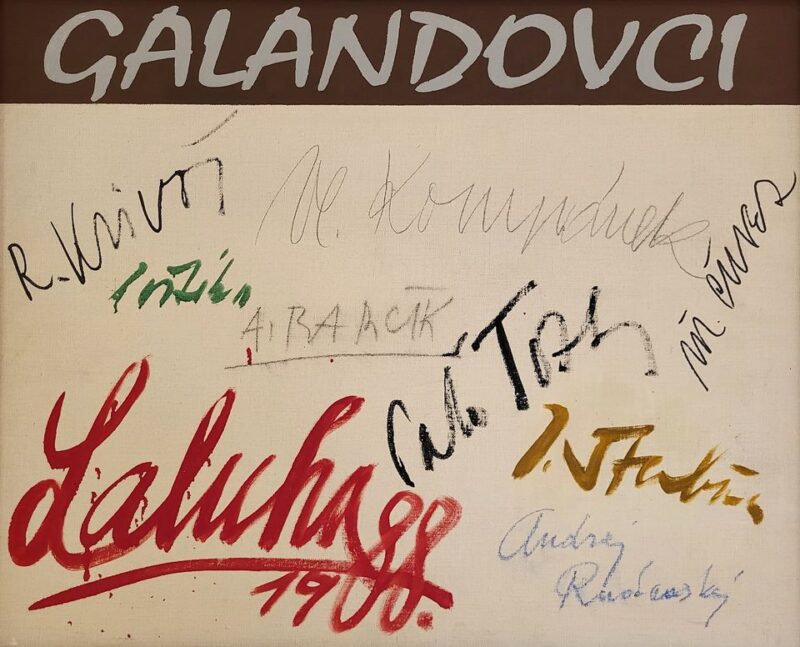
Design, applied art and craftsmanship are more of a surprise than an everyday occurrence in the galleries. They have had their place in the Slovak National Gallery for more than 60 years. For a long time, they were part of the dream of a Slovak art and industrial museum, and today they are above all a subtle but eloquent message about the vital relationships between design, art and craft.
The curators selected masterpieces and objects from the back shelves of depositories, reached for progressive works, also gave the floor to uncomfortable, controversial artifacts in order to find a visual and meaningful spark between them. You will recognize the works as bearers of information about the events and personalities of the collection, design and artistic quality, symbolism and place of origin in various contexts – as part of visual culture, economic practice, significant historical events and ordinary social and societal situations, such as politics. You can also study them in more depth thanks to the rich digital content.
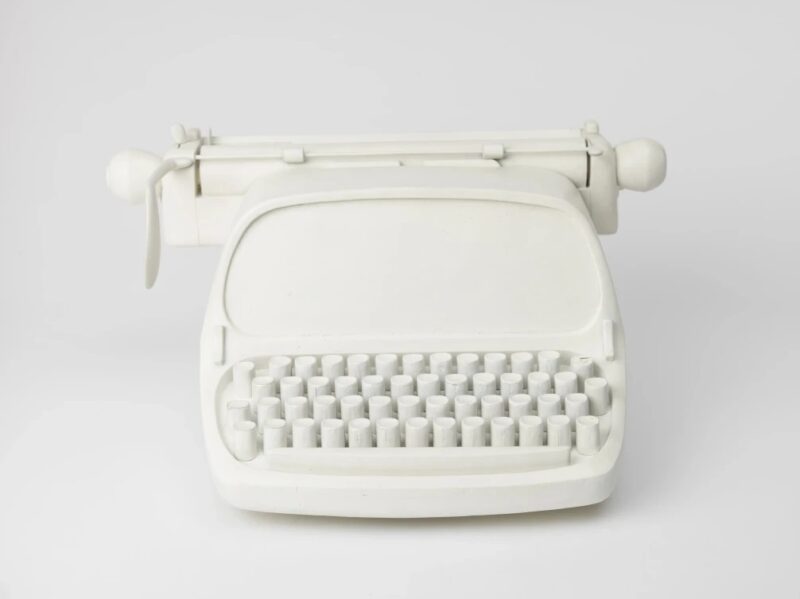
His sons, who “caught” their father’s love for collecting, helped shape its form and character. Thus the collection increasingly stood out in scope and quality from prevailing models of motivation, principles, and intention among private collectors. In the late 1990s the collection came out of the privacy of its owners’ home, becoming known to the public at Galéria Linea and later at Galéria Horský park. It grew considerably in visibility and appreciation thanks to loans of some of its works to eminent institutions.
In 2018, some 150 pieces from this collection were donated to the SNG – sculptures, paintings, drawings, prints, photographs, objects, and installations – a representative selection of the Zubaľ family’s two generations of collecting, with an acquisition value of around 3.5 million euros. The exposition is showing the greater part of the generous gift, a gesture unprecedented in the Gallery’s seventy-year existence.
The Crown Tower in Bratislava Castle holds significant historical value. Built in the 13th century, it is considered the oldest remaining structure within the castle. In the 15th century, it was incorporated into the Castle Palace as the southwest corner. It was named after the Hungarian crown jewels, which were kept there, except for intermittent periods between 1552 and 1783. In the present day, the Crown Tower serves various purposes. It houses a small exhibition showcasing the crowns of Hungarian kings, coronation medals, and artwork depicting coronations that occurred in Bratislava.
Furthermore, following its reconstruction, the tower’s upper floor now functions as an observation deck for visitors. From there, one can enjoy panoramic views of Bratislava and even glimpse three countries: Slovakia, Austria, and Hungary.
More information can be found here
The impulse and inspiration behind it was an effort to preserve a big collection of books of the Slovak writer and his wife. However, it wasn’t only about books and library but also about a collecting, or more precisely about a collector’s obsession.
The Kornel and Naďa Földvári Library is one of the unusual projects of the national gallery by which they go beyond or rather extend the usual borders of the gallery world. Maybe because its initiator was a writer and director Peter Krištúfek with who the gallery had started to prepare it.
Location: SNG, Esterházy palace. More information HERE.